Decentralized social networks are quietly moving from niche experiments to serious alternatives to traditional platforms. One of the names suddenly gaining attention is Crypto Damus — a project built on the Nostr protocol that reflects a broader shift in how users think about data ownership, censorship, and digital identity.
As interest in decentralized infrastructure grows across crypto, finance, and tech communities, platforms like Damus are becoming impossible to ignore.
What Is Crypto Damus?
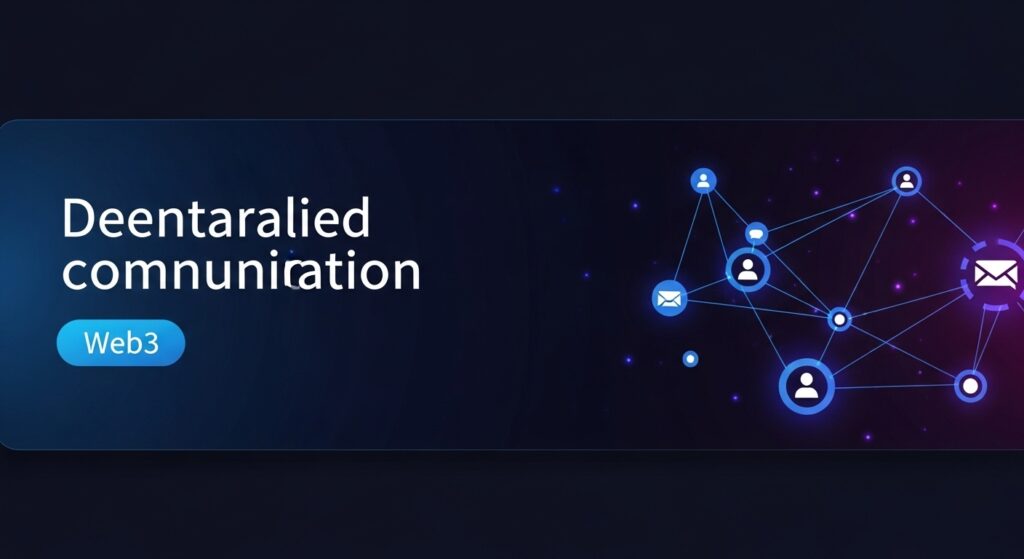
Crypto Damus is a decentralized social network client built on Nostr (Notes and Other Stuff Transmitted by Relays) — a protocol designed to enable censorship-resistant communication.
Unlike traditional social media platforms:
- There is no central server
- Users own their private keys
- Content is distributed via independent relays, not controlled by a single company
Damus itself does not own user data, moderate globally, or monetize attention through ads. Instead, it acts as a gateway to a decentralized communication layer.
Why Decentralized Social Networks Are Gaining Momentum
1. Growing Concerns Over Censorship
High-profile content moderation decisions on centralized platforms have pushed users to look for alternatives. Decentralized networks remove the single point of control, making global censorship significantly harder.
2. User Ownership of Identity and Data
On platforms like Damus:
- Your account is your cryptographic key
- Followers belong to you, not the platform
- You can switch apps without losing your network
This mirrors the broader crypto principle of self-custody, now applied to social identity.
3. Infrastructure, Not Hype
Unlike many short-lived Web3 social experiments, Nostr focuses on simple, scalable infrastructure rather than token incentives. This approach has attracted developers, Bitcoiners, and privacy-focused users.
How Crypto Damus Fits Into the Crypto Ecosystem
Crypto Damus sits at the intersection of:
- Decentralized identity
- Open protocols
- Bitcoin-aligned philosophy
Rather than launching its own speculative token, the ecosystem experiments with:
- Lightning Network payments
- Optional tipping and microtransactions
- Permissionless app development on top of the same social graph
This makes Damus more comparable to an open communication layer than a traditional startup.
Risks and Limitations
Despite growing interest, decentralized social platforms still face challenges:
- User experience is less polished than mainstream apps
- Content discovery can feel fragmented
- Moderation is local, not global — which may deter some users
- Network effects still favor centralized platforms
These factors limit short-term mass adoption, even as long-term interest increases.
Why Interest Is Rising Now
Several macro trends are converging:
- Increasing regulation of online platforms
- Growing skepticism toward Big Tech
- Expansion of crypto infrastructure beyond trading
- Demand for censorship-resistant communication during geopolitical uncertainty
Crypto Damus benefits from this environment without relying on market cycles or speculative narratives.
The Bigger Picture
Crypto Damus is not about replacing Twitter overnight. It represents a shift in how digital communication is structured — from platforms to protocols.
As decentralized finance matured beyond simple trading, decentralized social networks may be entering their own early growth phase.
Whether Damus becomes mainstream or remains a niche tool, its rising popularity highlights a deeper trend:
users are starting to value ownership and resilience over convenience.