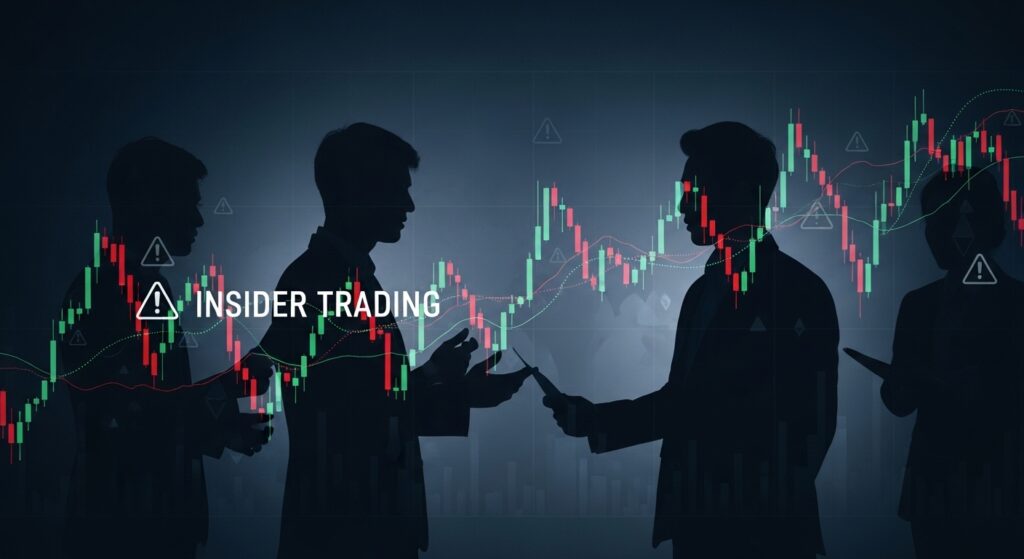
Insider trading is one of the most controversial topics in financial markets. It sits at the intersection of information, fairness, and market integrity — and becomes even more complex when applied to crypto markets, where transparency and regulation vary widely.
Understanding what insider trading is, how it works, and why it matters is essential for investors navigating both traditional finance and digital assets.
What Is Insider Trading?
Insider trading occurs when someone trades a financial asset based on material, non-public information — information that could significantly affect the asset’s price once disclosed.
In traditional markets, insiders typically include:
- Company executives and board members
- Employees with access to earnings or merger data
- Advisors, auditors, or legal professionals
- Anyone who receives insider information and acts on it
Not all insider trading is illegal. Executives can legally trade shares if transactions are disclosed and comply with regulatory rules. Illegal insider trading happens when trades are made secretly using information unavailable to the public.
Why Insider Trading Matters for Markets
Markets function on the assumption that all participants operate with equal access to public information. Insider trading undermines this principle and leads to several consequences:
- Erosion of trust in market fairness
- Distorted price discovery, where prices move before public announcements
- Higher perceived risk for retail investors
- Regulatory intervention, fines, and criminal charges
Over time, unchecked insider activity can reduce liquidity and discourage long-term investment.
How Insider Trading Works in Traditional Finance
In stock markets, insider trading often revolves around:
- Earnings surprises
- Mergers and acquisitions
- Regulatory approvals or rejections
- Major product launches
For example, unusual buying activity ahead of an acquisition announcement often triggers regulatory scrutiny. Authorities such as the SEC monitor trading patterns, communication records, and financial disclosures to detect violations.
Insider Trading in Crypto Markets: A Gray Area
Crypto markets introduce new challenges. While blockchains are transparent, information asymmetry still exists.
Common crypto-related insider scenarios include:
- Early access to token listings on exchanges
- Knowledge of protocol upgrades or vulnerabilities
- Private funding rounds and token unlock schedules
- Governance decisions known only to core developers
Unlike equities, many crypto projects lack clear insider definitions, and enforcement varies by jurisdiction. As a result, behavior considered illegal in traditional finance may fall into regulatory gray zones in crypto.
Is Insider Trading Illegal in Crypto?
The answer depends on jurisdiction and asset classification.
- If a token is classified as a security, insider trading laws may apply
- If classified as a commodity or utility token, enforcement is less clear
- Decentralized protocols complicate accountability
Regulators increasingly argue that insider-style behavior in crypto markets harms investors in the same way as in traditional markets, pushing for stricter oversight.
How Insider Trading Affects Crypto Prices
Insider activity can lead to:
- Sudden price spikes before major announcements
- Sharp sell-offs after news becomes public
- Increased volatility around listings and upgrades
- Loss of confidence in project governance
Retail traders often enter positions after insiders have already positioned themselves, increasing downside risk once information is priced in.
How Investors Can Protect Themselves
While insider trading can’t be eliminated by individual investors, risk can be reduced by:
- Avoiding emotional reactions to sudden price moves
- Watching on-chain data for unusual wallet behavior
- Understanding token vesting and unlock schedules
- Prioritizing transparent projects with clear governance
- Being cautious around hype-driven announcements
Long-term investors tend to be less exposed than short-term traders chasing momentum.
Why Insider Trading Is Under Growing Scrutiny
As crypto markets mature and institutional participation grows, regulators increasingly apply traditional market standards to digital assets.
High-profile cases, exchange compliance requirements, and clearer legal definitions suggest that insider trading — in both stocks and crypto — will remain a major focus in the years ahead.
Conclusion
Insider trading is fundamentally about information imbalance. Whether in traditional finance or crypto markets, it undermines trust, distorts prices, and increases systemic risk.
As markets evolve, transparency, regulation, and investor awareness will play a key role in shaping fairer trading environments. For investors, understanding how insider trading works is not just academic — it’s essential for navigating modern financial markets responsibly.