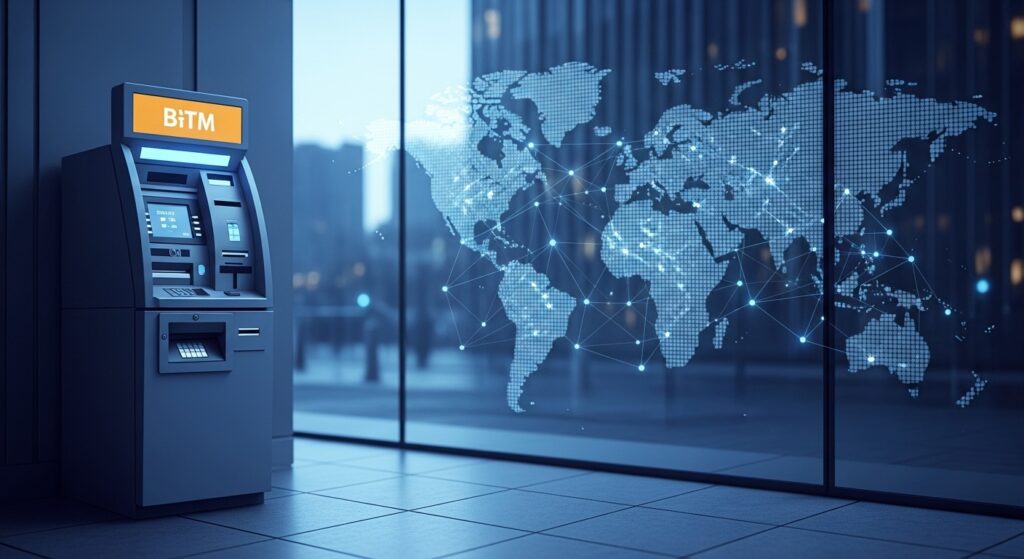
Bitcoin ATMs were once seen as a niche experiment — a curiosity found in tech hubs or crypto conferences. Today, they are becoming a global infrastructure layer for digital assets. With thousands of machines operating across North America, Europe, and parts of Asia, crypto ATMs are quietly reshaping how everyday users access Bitcoin and other cryptocurrencies.
So why are Bitcoin ATMs expanding worldwide, and what does this trend mean for real crypto adoption?
What Is a Crypto ATM?
A crypto ATM (often called a Bitcoin ATM) is a physical machine that allows users to buy — and sometimes sell — cryptocurrencies using cash or debit cards. Unlike traditional bank ATMs, these machines connect users directly to blockchain networks or liquidity providers.
Most crypto ATMs support:
- Bitcoin (BTC)
- Ethereum (ETH)
- Litecoin (LTC)
- Stablecoins like USDT or USDC (in some regions)
The process is simple: scan a wallet QR code, insert cash or pay by card, and receive crypto within minutes.
Why Crypto ATMs Are Growing Globally
1. Lower Barrier to Entry
Crypto ATMs remove the complexity of centralized exchanges. Users don’t need to:
- open trading accounts
- connect bank accounts
- understand order books
For newcomers, this simplicity is critical.
2. Cash-Based Access in a Digital World
In many regions, cash is still dominant. Crypto ATMs bridge the gap between physical money and digital assets, especially in countries with:
- limited banking access
- strict capital controls
- underdeveloped fintech infrastructure
3. Growing Institutional Support
ATM operators are no longer small startups. Large networks now partner with:
- payment processors
- compliance providers
- licensed crypto exchanges
This professionalization has accelerated deployment and trust.
4. Regulatory Clarity in Key Markets
While regulation remains fragmented, clearer rules in countries like the U.S., Canada, and parts of Europe have encouraged expansion rather than shutdowns. Compliance-focused ATM operators can now scale legally.
The Role of Crypto ATMs in Adoption
Crypto ATMs are not designed for professional traders. Their importance lies elsewhere.
Financial Inclusion
For unbanked or underbanked populations, crypto ATMs offer a rare on-ramp into digital finance without relying on traditional banks.
Education Through Use
Buying crypto through an ATM often becomes a user’s first interaction with blockchain technology. This hands-on experience drives deeper engagement later through wallets, DeFi, or exchanges.
Crisis and Inflation Hedge
In countries facing currency instability, Bitcoin ATMs provide fast access to alternative stores of value — even when banking systems are unreliable.
The Downsides: Fees and Regulation
Crypto ATMs are not without criticism.
- High fees: Often ranging from 5% to 15%, far higher than online exchanges
- Limited liquidity: Large transactions may be restricted
- Regulatory pressure: Some jurisdictions are tightening KYC and reporting requirements
However, despite these drawbacks, usage continues to grow — suggesting demand outweighs cost concerns.
What This Trend Signals for Crypto’s Future
The expansion of crypto ATMs shows that adoption is no longer limited to online-native users. Bitcoin is moving into physical space, becoming accessible in shopping malls, gas stations, and convenience stores.
This signals a shift from speculative interest to functional usage.
Crypto ATMs won’t replace exchanges — but they don’t need to. Their role is onboarding, accessibility, and normalization.
And that role is becoming more important than ever.
Bottom line:
Crypto ATMs are not a temporary trend. They are a sign that Bitcoin and digital assets are embedding themselves into everyday financial life — one physical transaction at a time.