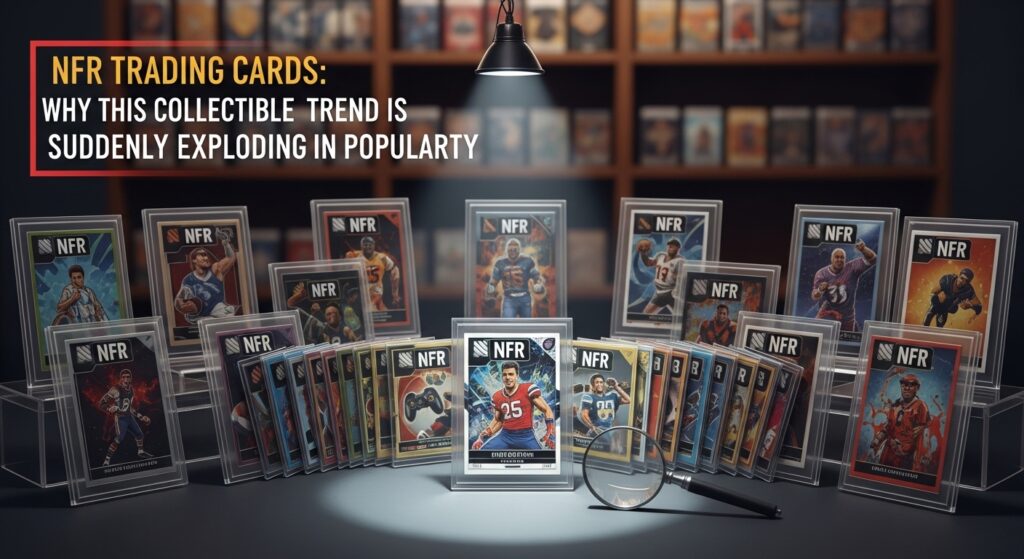
The trading card market has seen countless waves of interest over the years — from Pokémon to sports cards to limited-edition hobby releases. But one phrase has recently surged in search trends: NFR Trading Cards.
Collectors, resellers, and even casual hobbyists are suddenly paying attention.
In this article, we break down what NFR trading cards are, why they’re trending, and what collectors should know before getting involved.
What Are NFR Trading Cards?
NFR stands for “Not For Resale”, referring to cards distributed for promotional, display, or limited-use purposes.
They are typically:
- not sold directly to consumers
- intended for demonstration or marketing
- released in extremely small quantities
- often tied to special events or retail promotions
Because they are not part of the standard retail distribution chain, NFR cards instantly fall into the “hard-to-find collectible” category.
Why NFR Cards Are Trending Now
Interest in NFR trading cards has spiked for several reasons:
1. Scarcity Drives Collector Demand
NFR cards usually exist in far smaller numbers than regular sets. Limited supply = higher perceived value.
2. Rise of Alternative Collectibles
Collectors are increasingly exploring niche categories outside mainstream TCG brands. NFR cards offer something unusual and exclusive.
3. Viral Social Media Exposure
Unboxings, rarity explanations, and price speculation on TikTok, Instagram, and YouTube have boosted visibility.
4. Market Shift Toward “Unique” Over “Mass Market”
Many collectors now prioritize story, rarity, and uniqueness instead of volume-based sets.
Types of NFR Trading Cards
NFR cards can appear across many collectible categories:
- Trading card games (TCG) — demo cards, retailer promo cards
- Sports cards — preview versions distributed to vendors
- Entertainment cards — exclusive media or convention promos
- Special event cards — limited releases for anniversaries or product launches
Some collectors focus on entire NFR collections, while others target specific franchises.
Are NFR Cards Valuable?
Value varies widely depending on:
- rarity
- brand or franchise
- condition (grading matters)
- demand within the collector community
In some cases, NFR cards sell for multiples of equivalent standard cards simply due to scarcity.
However, because they are not part of official retail releases, pricing is less predictable.
Risks to Consider Before Buying
NFR cards are exciting, but collectors should be aware of potential risks:
- Authenticity issues — limited distribution makes counterfeits harder to track
- Volatile pricing — markets can spike during hype cycles, then cool
- Lack of public population data — unlike major TCGs, print counts are rarely disclosed
- Condition uncertainty — many NFRs originate from retail displays, not sealed packs
As always, research and verification are key.
Who Should Consider Collecting NFR Cards?
They’re a great fit for:
- collectors who love rare or unusual items
- investors looking for niche categories
- TCG fans interested in promotional variations
- hobbyists who enjoy long-term rarity plays
NFR cards tend to appreciate more steadily in niche circles than in mainstream speculation waves.
Conclusion: A Growing Niche Worth Watching
NFR trading cards combine rarity, uniqueness, and strong collector appeal — the perfect recipe for a trend.
As more people discover this category through viral posts and secondary market activity, demand is likely to keep rising.
For collectors who appreciate limited-edition items with a story behind them, NFR cards may represent one of the most interesting emerging niches in the trading card world.